
Podiumsdiskussion – Tuning In
23.04.2026 18:00-19:30
Welche Klänge behalten wir aus der humanitären Arbeit in Erinnerung? Wie vermittelt eine Stimme Emotionen? Wer spricht – und wer hat das Recht, gehört zu werden? Und was ist mit der Musik? Welche Rolle spielt sie im humanitären Bereich?
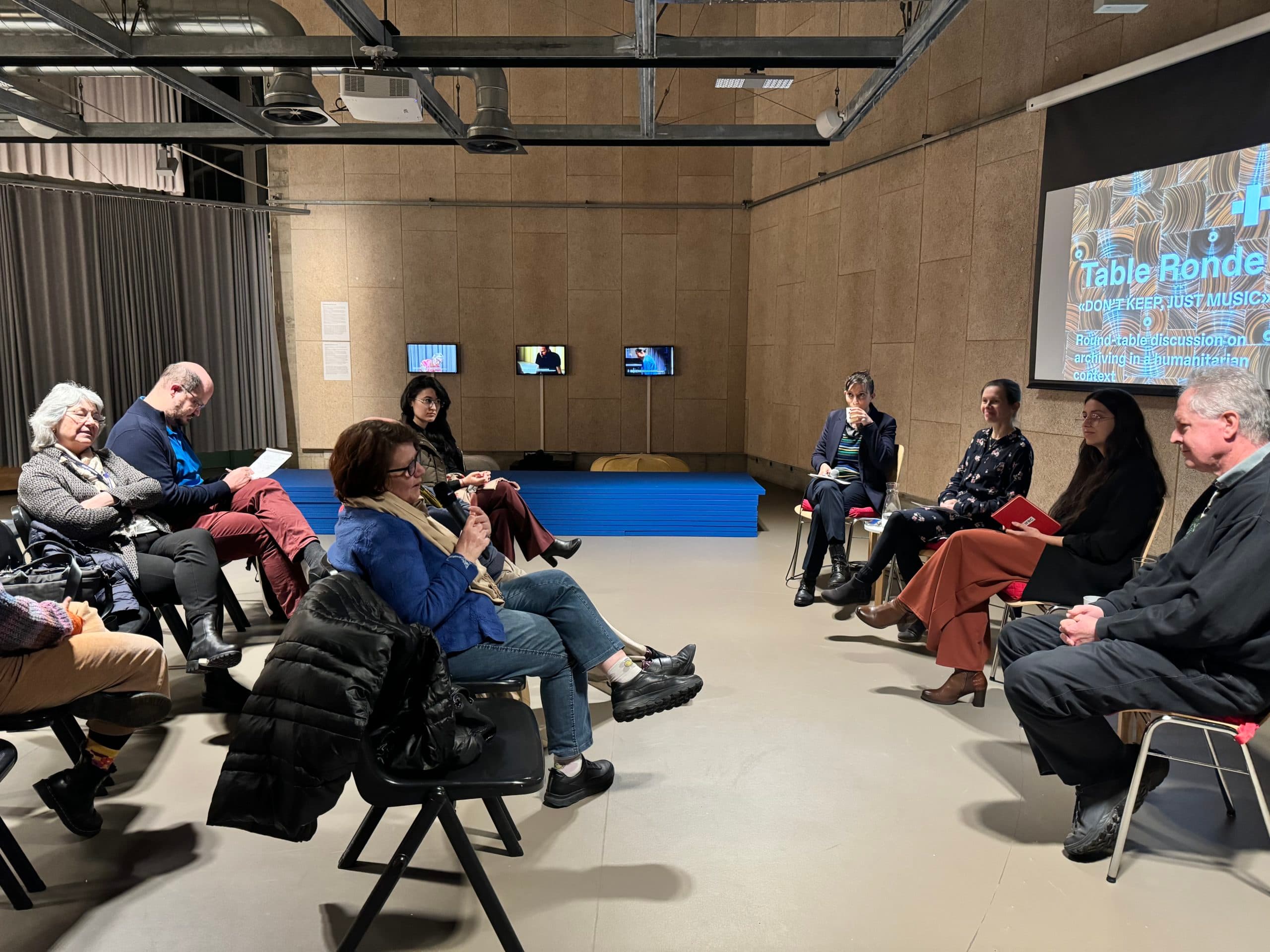
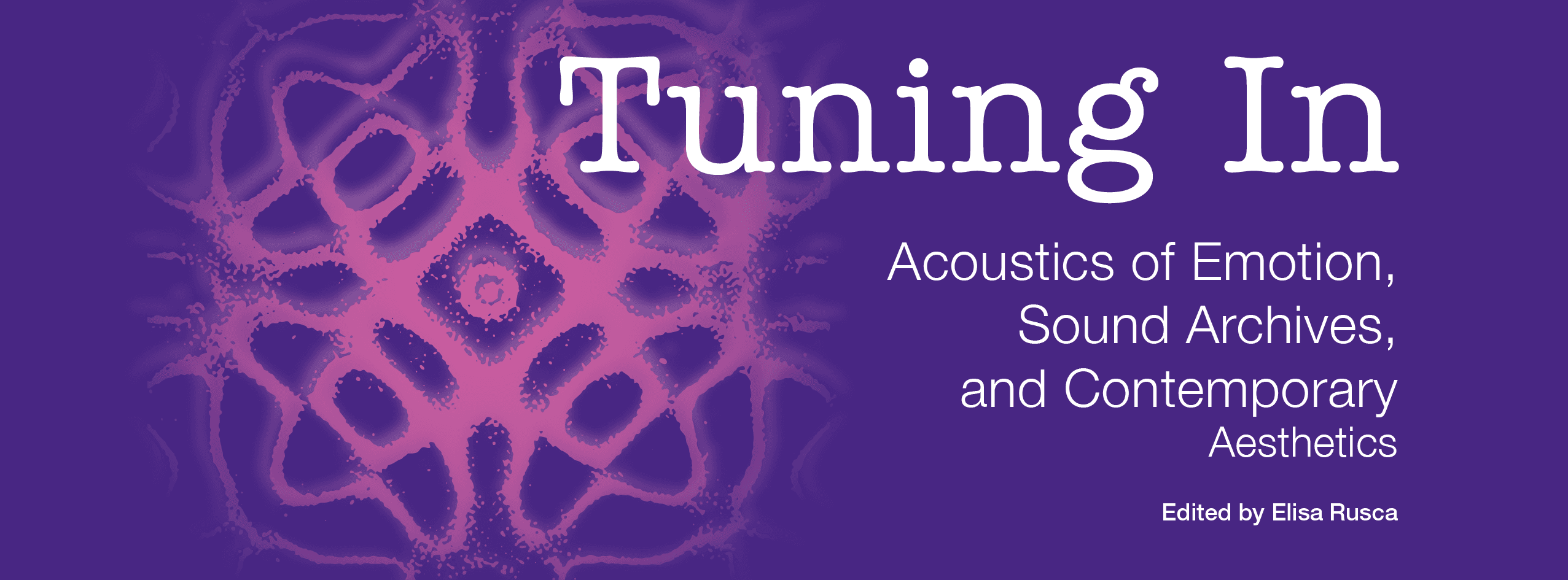
Um diesen Fragen nachzugehen, laden wir Sie zu einer Podiumsdiskussion anlässlich der Veröffentlichung des Buches Tuning In: Acoustics of Emotion, Sound Archives, and Contemporary Aesthetics ein. Hervorgegangen aus der temporären Ausstellung Tuning In — Acoustique de l'émotion, untersucht dieses Buch die Stimme als einen zugleich fragilen und kraftvollen Raum, in dem Erinnerung, Emotion und humanitäre Praxis aufeinandertreffen.
Diese öffentliche und für alle zugängliche Diskussion hat zum Ziel, gemeinsam zu erkunden, welchen Beitrag Stimmen und Klänge zur humanitären Arbeit leisten. Die Diskussion wird von Natacha Farina Groux moderiert und findet unter Mitwirkung von Alain Dufaux, Didier Granjean, Paul-Henri Arni, Manuela Filippa, Sarah-Joy Maddeaux, Alain Vincent Chardonnens und Elisa Rusca statt.
Praktische Informationen
Donnerstag, 23. April 2026
18:00 – 19:30 Uhr
Freier Eintritt
Die Diskussion findet auf Französisch statt.
Referenten
Natacha Farina Groux - Moderator
Natacha Farina Groux is a documentalist, researcher, and archivist at Swiss Radio and Television (RTS), where she oversees the conservation and promotion policy for the sound and heritage archives of La Première. She also supports journalists in their information analysis, investigations, and fact-checking needs for the programs Géopolitis and Vraiment.
From 2004 to 2021, she worked at the International Committee of the Red Cross (ICRC) as an information analyst for the Americas and later Eurasia regions. There, she produced contextual, security, and forward-looking analyses and collaborated with crisis cells in various contexts. She trained teams in numerous countries in contextual and security analysis. She also led several projects related to open-source information analysis, including in collaboration with EPFL.
Sarah-Joy Maddeaux
Sarah-Joy Maddeaux is the audiovisual archivist at the International Federation of Red Cross and Red Crescent Societies (IFRC). Since her appointment in 2020, she has been working on the digitization, cataloging and publication at the IFRC's film, video, audio, and photographic collections. She trained as an archivist at Aberystwyth University (UK) and completed a PhD in history at the University of Bristol (UK).
Didier Grandjean
Didier Grandjean is a Full Professor in the Department of Psychology and Educational Sciences and Director of the Interfaculty Centre for Affective Sciences at the University of Geneva. He obtained his PhD in 2005 under the supervision of Klaus Scherer, focusing on the dynamics of cognitive evaluation processes in emotion using electroencephalographic (EEG) methods. He has published over 150 articles in international scientific journals in psychology and neuroscience on emotional processes related to the perception and production of emotional prosody, evaluation processes, the emergence of feelings, music and emotion, olfaction and emotion, and the perception and production of emotional facial expressions.
Paul-Henri Arni
Paul-Henri Arni is a foreign policy columnist for the Swiss daily newspaper lematin.ch.
He served as the UN Secretary-General's Representative in Cyprus, where he led the Committee on Missing Persons (CMP) from 2013 to 2023. This institution, comprising around one hundred scientists from both the Greek Cypriot and Turkish Cypriot communities, is tasked with locating, exhuming, identifying, and returning the remains of the 2,002 missing persons from the turbulent period of 1963–1964 and the 1974 war to their families.
Before joining the UN, Mr. Arni held senior positions at the International Committee of the Red Cross (ICRC). From 2011 to 2013, he directed the "Health Care in Danger" global project under the Operations Department, aiming to reduce violence against medical personnel and facilities in conflict zones. He served as Head of the ICRC Delegation in the Balkans from 2007 to 2011 and led the Regional Delegation in Kiev, covering Ukraine, Belarus, and Moldova, from 2003 to 2007. He also headed ICRC missions in Chad (2001–2003) and Tanzania (1999–2000). Previously, he worked as a field delegate in Pakistan, Bosnia-Herzegovina, Sri Lanka, and Uganda. Additionally, he directed the ICRC's audio-visual production department at the Geneva headquarters from 1994 to 1998.
Born in 1958, Paul-Henri Arni is a Swiss citizen who holds degrees in Contemporary History and Political Science from the University of Geneva. He is married and has a daughter.
Alain Dufaux
Alain Dufaux studied electrical engineering at EPFL before joining the University of Neuchâtel, where his research focused mainly on speech and sound compression and recognition. He completed his PhD in 2001, in the field of automatic recognition of impulsive sounds. After spending 6 years as a specialist in developing low-power algorithms for the hearing aid industry, he returned to EPFL in 2007, initially running a research group dedicated to computer vision, as well as taking on teaching duties and co-supervising several PhDs. He joined the Vice-Presidency for Innovation in 2011, and since 2014 has been working as Director of Operations and Development at EPFL's Cultural Heritage & Innovation Center, an interdisciplinary competence center dedicated to the digitization, preservation, and enrichment of sound, audiovisual, and photographic archives.
Manuela Filippa
Manuela Filippa Completed her PhD in developmental psychology at Université Paris Nanterre. She was a postdoc researcher at Université Paris Descartes in 2015 and at the University of Aosta Valley in 2017. She is currently a postdoc at HUG in Geneva with Prof. Petra Hüppi, and at Geneva University with Prof Didier Grandjean. For over 10 years, she has been studying the effects of the mother's voice on the developments of premature babies, in collaboration with international research centers. Trained as a musician, she teaches music psychology and music education at the university of Aosta Valley and has become an expert in the fields of music psycho pedagogy and early childhood. She has participated in numerous research projects on the ontogeny of musical experience, and has published texts, contributions, and articles.
Alain Chardonnens
Alain Chardonnens Graduated with a BA in Information Science at the at Haute école de gestion in Geneva and has since been working as a digitization specialists at EPFL's Cultural Heritage & Innovation Center
Elisa Rusca
Elisa Rusca has completed an MA in art history and archaeology from the University of Lausanne, followed by doctoral studies in philosophy and visual cultures at Goldsmiths University of London. Since 2021, she has been directing the collection and exhibitions department at the international Red Cross and Red Crescent museum in Geneva, where she has curated major projects such as Petrit Halilaj – Histoire inachevées, Équilibres précaires, and Human Kind., For which she also edited the catalog published by Thames and Hudson. As an independent curator over the past 15 years she has organized more than 30 exhibitions in Switzerland and abroad
1 | 2